Why Good Entries Still Lose Money
Updated: Jun 4
A good entry feels right. Price hits the level, reacts cleanly, and gives the setup you were waiting for.
Then the trade still loses.
That does not always mean the entry was bad. In many cases, the problem comes after the entry. Bad risk, poor stop placement, weak management, fees, spread, slippage, or emotional decisions can turn a good setup into a losing trade.
Good Entry Is Only One Part
Many traders treat the entry like the most important part of trading. They wait for the perfect breakout, clean retest, support bounce, or resistance rejection. But after they enter, the plan becomes unclear.

The stop is placed randomly. The target is too close. The size is too big. The exit depends on emotion. This is where good entries start losing money.
The entry only starts the trade. It does not decide how much you risk. It does not protect you from a bad stop. It does not fix poor trade management. A good setup still needs a full plan: entry, stop, invalidation, target, size, and exit rules.
Poor Risk-To-Reward Kills The Trade
A trader can enter from a good area and still take a bad trade if the reward is not worth the risk.
For example, risking 3% to make 1% puts pressure on the trader before the trade even starts. Even if the entry looks clean, the math is weak.
This gets worse when fees, spread, and slippage are added. A tiny target may look fine on the chart, but after costs, the real reward becomes smaller.
That is why every trade needs one simple question before entry: “If this trade works, is the reward worth the risk?”
Bad Stop Placement Destroys Good Ideas
Sometimes the direction is correct, but the stop is placed badly. The trader enters long from support, but the stop is too close. Price makes a normal pullback, touches the stop, and then moves up.
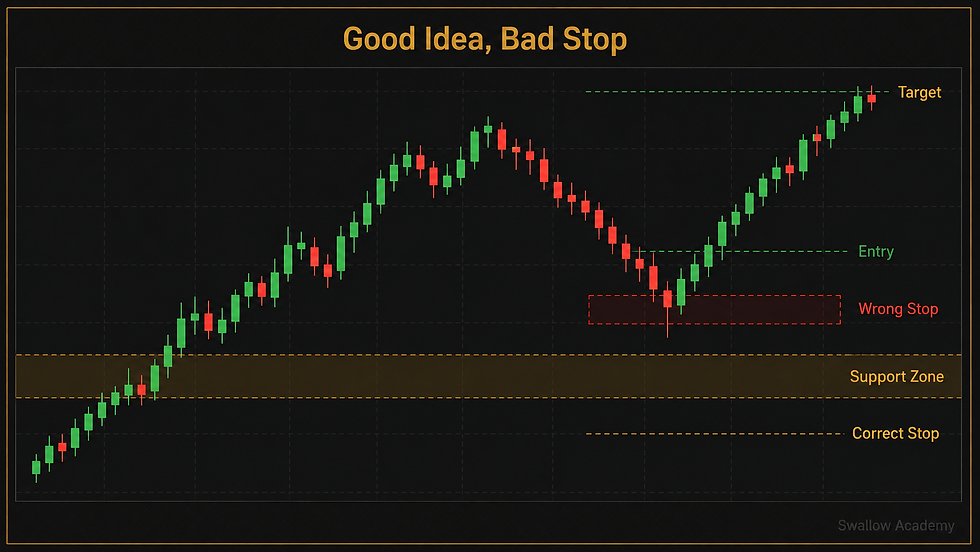
This feels unlucky, but often it is not luck. It is poor stop placement. A stop should not be placed where it feels right, it should be placed where it is right.
For a long trade, the stop should usually be below the support or structure that created the setup. For a short trade, it should usually be above the resistance or rejection area. If the stop is inside normal market range, even a good idea can lose.
Position Size Changes Everything
The same setup can feel easy with small size and painful with big size. When position size is too large, every candle feels personal. A small pullback creates panic. A normal stop feels like a disaster. The trader starts moving the stop, closing early, or entering again with no real reason.
That is how one normal loss becomes a bad trading day.
Position size decides how much pressure you feel during the trade. If the risk is too high, your plan becomes harder to follow. Before entering, know the exact amount you are ready to lose if the trade fails. Not the amount you hope to lose. The amount you can accept without breaking your rules.
Management After Entry Matters
A good entry can still become a bad trade because of poor management. Some traders enter well, then react to every candle. They take profit too early, move the stop too soon, add more size without a reason, or re-enter emotionally after getting stopped. The chart may have been clean at the start, but the trade becomes messy after entry.

Good management means knowing the rules before the trade starts. Where is the stop? Where is the first target? When can the stop be moved? What happens if price rejects the level? What happens if price moves fast?
Simple Checklist Before Taking The Trade

Before entering, check the full trade. Not for hours. Just enough to avoid simple mistakes. Ask yourself:
Is the entry clean? Is the stop in a logical place? Is the target worth the risk? Is the position size safe? Do I know what makes this trade invalid? Do I know when to exit if price does not move as expected?
This checklist will not make every trade win. Nothing will. But it can stop a good entry from becoming a bad decision.
Final Take
Good entries still lose because trading is bigger than the entry.
The entry opens the trade. Risk, size, stop placement, market conditions, and management decide what happens next. A clean entry is useful. A clean plan is what protects you.
Swallow Academy
Telegram: https://t.me/SwallowCryptoAcademy Best Exchange (BingX | -20% Off Trading Fees): https://bingx.com/en/activity/8thAnniversary?ref=IMZYPAVP6 Best Prop Firm (HyroTrader | -10% Off Challenge): https://www.hyrotrader.com/?coupon=SWALLOW