Why Most Crypto Traders Misread Support and Resistance?
- May 5
- 2 min read
Support and resistance are the most talked-about concepts in trading. They are also the most misunderstood.
Most traders treat them like walls. They are not walls. They are zones where decisions get made — and if you treat them like exact lines, the market will punish you for it.
Lines Are a Lie
The first mistake is drawing a single line and expecting the price to respect it to the pip. Markets are not that precise.
Price is driven by human decisions — entries, exits, stop hunts, liquidations. Those decisions happen across a range, not at one exact number.

When you draw a thin line and wait for the price to tap it perfectly, you will miss trades, get shaken out, and constantly feel like the market is "cheating" you. It is not cheating you. You are just using the wrong tool.
The Zone Approach Changes Everything
Every support or resistance level should be treated as a "zone with depth". Look left on the chart. Where did price stall, reverse, or consolidate? That cluster of candles tells you the zone. It might be 200 points wide on Bitcoin. That is normal. That is real.
When price enters that zone, you start watching for reaction — not before, not after. Inside the zone is where the story gets written.
Old Resistance Becomes New Support — But Not Always
This is the concept every beginner learns and every intermediate trader over-applies. Yes, flipped levels are powerful. But they do not work blindly.
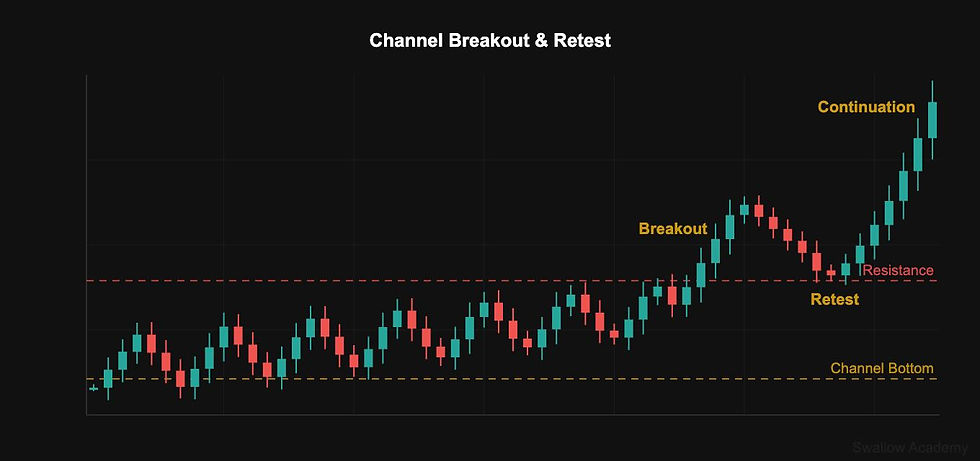
The flip only matters when price breaks the level with "strong momentum and closes convincingly" beyond it. A wick through a level is not a break.
A slow grind through with no volume is not a break. Traders see the textbook setup and skip the confirmation. That is where accounts get hurt.
Volume Confirms What Price Suggests
Most traders draw levels using price alone. That is half the picture. Volume tells you whether a level actually mattered. High volume at a previous price range means real participants made real decisions there. That zone carries weight.
Low volume at a level means it was passed through without conviction — and those levels rarely hold. "Volume-backed zones" hold. Price-only levels are guesses dressed up as analysis.
Context Is the Variable Everyone Ignores
A support level in a downtrend is not the same as a support level in an uptrend. The same zone can be a high-probability long setup in one context and a trap in another.

Where is the level sitting relative to the higher timeframe structure? Is the price in a range or a trend? Is there a liquidity pool sitting just below that support, waiting to get swept?
These questions separate traders who use support and resistance as a real edge from traders who use it as decoration on their charts.
The Key Takeaway
Support and resistance only work when you stop treating them like rules and start treating them like "evidence."
Zones over lines. Volume over assumptions. Context over textbook patterns. The market does not owe your level any respect. Your job is to read whether the market agrees — and act only when it does.
Swallow Academy
Telegram: https://t.me/SwallowCryptoAcademy Best Exchange (BingX | -20% Off Trading Fees): https://bingx.com/en/activity/8thAnniversary?ref=IMZYPAVP6 Best Prop Firm (HyroTrader | -10% Off Challenge): https://www.hyrotrader.com/?coupon=SWALLOW


